

CHROs today juggle multiple headaches: long training programs that drain budgets and hours, low employee engagement, and fuzzy metrics on who’s actually learned what. Sounds familiar? Microlearning apps could be your solution.
Traditional one-size-fits-all course structures often waste employees’ time on topics they already know, and leave no easy way to prove skills or measure ROI.
The result? L&D dollars are spent without certainty of skill mastery, productivity suffers, and internal mobility stalls. As one SHRM report notes, 89% of organizations now say upskilling is more cost-effective than hiring – meaning wasted training is tantamount to throwing money away.
The solution? Microlearning apps. But first let’s understand what microlearning is.
What Is Microlearning?
Microlearning is a modern L&D approach that breaks training into short, focused lessons.
Experts define it as delivering content “in small, focused bursts – typically 3–10 minutes in length – each designed to meet a specific learning outcome”.
Unlike lengthy courses covering many topics, microlearning modules tackle one microskill or concept at a time. They’re often mobile-friendly and on-demand, so employees can learn in the flow of work – between meetings or while commuting. It’s also the foundation of a new wave of learning trends in 2026, prioritising bite-sized learning and redefining how individuals and organizations approach upskilling, training programs, and set up lifelong learning mechanisms.
By aligning with how people pay attention, microlearning cuts cognitive overload and boosts retention. In fact, studies show microlearning improves knowledge retention by 50% compared to traditional methods. And completion rates skyrocket: about 83% of employees finish 10-minute microlessons, versus only 20–30% for long e-learning courses. In short, microlearning is agile, bite-sized learning built for today’s fast pace and shorter attention spans.
It’s no surprise that microlearning apps and platforms have taken off over the last few years. Attention spans are shrinking, and we live in an age of Instagram, YouTube Shorts, and bite-sized content. For a long time, edtech tried to simply digitize existing learning formats—pushing hour-long lectures onto today’s learners. This often backfires.
But here’s the catch: not every app that claims to offer microlearning actually delivers. The best microlearning apps combine credibility with proven pedagogy—methods like spaced repetition and retrieval practice—along with intuitive UX and, most importantly, measurable outcomes.
Duolingo remains a well-known microlearning example because of how effectively it applies repetition and gamification. Many apps now take the same scientific principles and apply them to professional development and skill-building.
So which microlearning platforms actually deliver on this promise? Below are credible global picks and how to decide which one fits your learning goals.
In the corporate world, this evolution is even more significant. Microlearning for corporate training and microlearning for employee assessment are transforming how companies train, evaluate, and upskill their teams. The benefits of microlearning apps are clear: faster onboarding, continuous skill relevance, higher knowledge retention, and more engaged employees.
How Microlearning Solves CHRO Pain Points
Save Time & Cut Costs: Microlearning slashes training hours. Organizations report up to 60% reduction in time spent training when using microlearning.
No more pulling workers off the job for days. Short modules are developed faster (often 3× quicker) and cost about 50% less than long courses.
Without travel, venues or printed materials, training becomes a digital, on-demand service.
All this means faster ROI: studies find companies cutting training time this way see quicker onboarding and productivity gains, directly boosting the bottom line.
Increase Engagement
Bite-sized, relevant learning is simply more engaging. Employees find it easier to complete a 10-minute module than a 2-hour lecture.
Indeed, 94% of learners report being satisfied with microlearning platforms, and engagement can improve by up to 50% versus traditional training.
Rather than “death by PowerPoint,” interactive videos, quizzes and games keep learners active. Higher engagement means people actually absorb and apply what they learn, rather than tuning out.
Personalized Learning Paths
Microlearning platforms like ours often use adaptive technology to tailor training to each person. Instead of one path for all, AI-driven systems analyze an employee’s role, past learning, and skill gaps to craft a custom learning path. This prevents wasted time on material already mastered.
For instance, adaptive assessments can “drill down” into a learner’s knowledge, focusing only on what they still need to learn.
Outcome-Based Assessment
Microlearning moves beyond pass/fail quizzes. Each micro-module can be outcome-focused: learners demonstrate specific skills (through simulations or projects) before moving on. This makes mastery measurable. Rather than generic test scores, you see concrete evidence of on-the-job readiness. Analytics dashboards then give you real-time engagement metrics and progress reports, so CHROs know exactly where skill gaps remain. This precise measurement turns L&D into a data-driven function.
Faster Upskilling & Mobility
With microlearning, critical skill gaps can be closed rapidly. Because content is modular and on-demand, employees learn just what they need when they need it. Embedding microlearning into workflow can cut time-to-competency by 30–50% for roles like sales or support.
In a tight labor market, that makes internal mobility and project readiness possible on a much faster timeline. In fact, recent industry reports show AI-driven upskilling (which often uses micro-lessons) is fueling retention and promotion: one company saw half of new positions filled by existing employees.
In short, microlearning helps organizations “make people productive faster,” closing gaps without long lags.
Your brain likes it because it remembers more, and gets used to learning. Your wallet likes it (in some cases). Your to-do list likes it because you don’t have to block hours at once. Your CV likes it because you get a real boost!
Below are apps and platforms commonly cited in edtech reviews, corporate training roundups, and by real users.
Microlearning Apps for professionals
LearnTube.ai
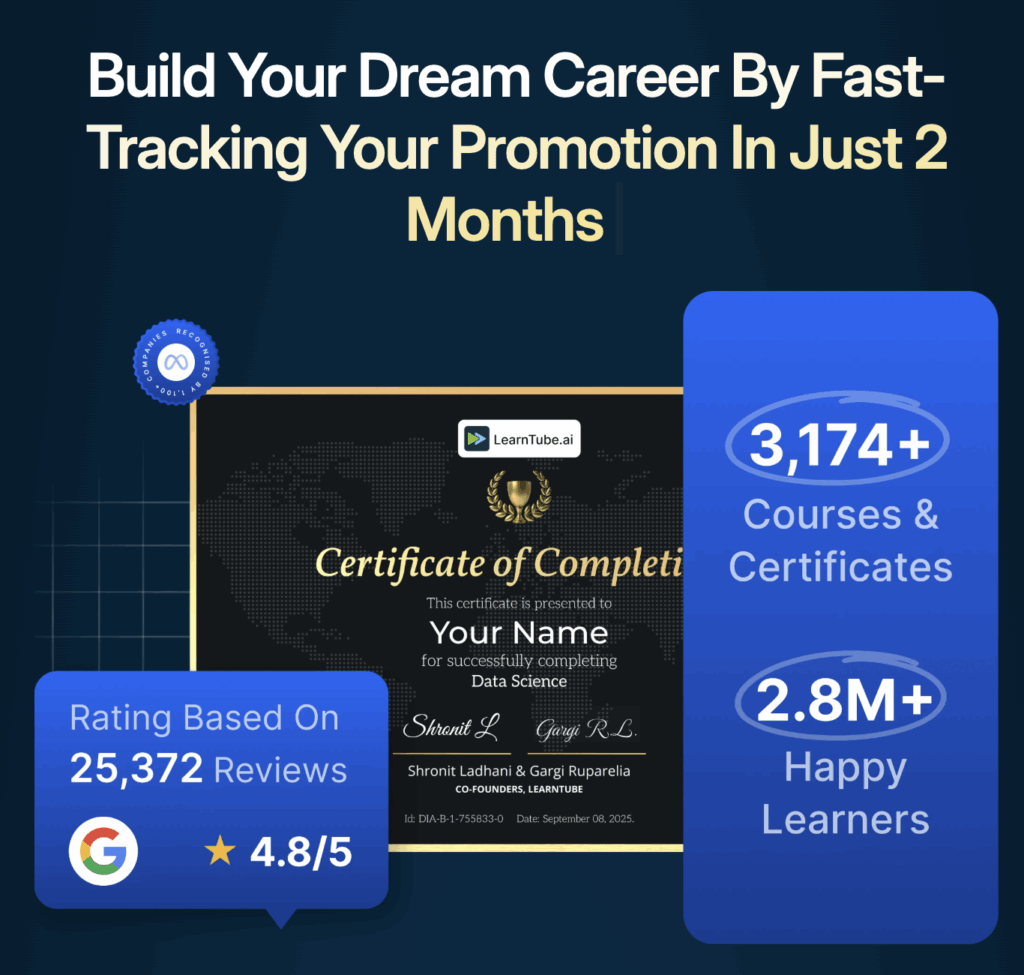
LearnTube.ai (formerly CareerNinja) uses a microlearning format boosted by an AI-powered system that personalizes learning paths and conducts dynamic assessments to test your competence in specific skill areas. Instead of requiring learners to absorb large amounts of information at once, LearnTube.ai offers two products: a 10-minute assessment to measure your proficiency and “Personalise,” which helps you build a customized upskilling roadmap.
Also Read: Top Skills to Learn in 2026
If you know a little Python but aren’t sure whether you’re ready for the next level, you take a 10-minute assessment. The AI analyses your proficiency with real-world scenarios. Then you can either take a full course or brush up on a micro-skill like “Python Object-Oriented Programming.” or “Python in Data Science”. This approach supports focused, on-the-go learning and saves time by keeping learning short, smart, and directly tied to outcomes.
Khan Academy
Khan Academy offers micro-sized lessons mainly in math, science, and foundational subjects, making it a reliable resource for quick conceptual learning.
Its short videos and practice tasks break down complex topics into digestible parts, aligning with core microlearning principles. While it is primarily designed for school-level education rather than professional upskilling, its structured approach shows how microlearning can support consistent knowledge building over time.
Axonify
Axonify is a well-established microlearning platform used by frontline and operational teams in retail, logistics, and hospitality. It focuses on short, scenario-based modules reinforced through quizzes and repetition, keeping training practical and easy to absorb. Axonify is strong in compliance and habit-building, though its scope is narrower for learners seeking broader skill development beyond workplace SOPs.
Qstream
Qstream specializes in microlearning delivered through spaced repetition and scenario-based questions, making it effective for reinforcing knowledge over time.
It is widely used for sales enablement and compliance training where knowledge retention is critical. Qstream’s format is structured and data-driven, though it is best suited for organizations that need continuous reinforcement rather than learners exploring new skills.
Blinkist
Blinkist provides microlearning through condensed summaries of nonfiction books, helping learners absorb key ideas quickly.
It is popular among users who want quick insights on leadership, psychology, and productivity. While Blinkist is useful for conceptual awareness, it is not built for hands-on skill application or job-oriented learning – making it more of a supplement than a complete microlearning pathway.
TalentCards
TalentCards delivers microlearning in a mobile-first “flashcard” format, making it easy for teams to learn short instructions, checklists, or essential concepts quickly. It is commonly used for distributed or frontline workforces where training must be simple and accessible.
The platform focuses on rapid knowledge delivery rather than in-depth skill mastery, which works well for operational training but less so for end-to-end professional upskilling.
A quick search will reveal many others: Brilliant, Mimo, Nerdist, iSpring, and more. Some are overhyped as microlearning apps. Others may support hobbies or personal interests but don’t necessarily help with career advancement.
So how do you choose?
How to Choose the Best Microlearning Platform for You
Here’s a step-by-step guide to evaluate microlearning apps and platforms and test for real effectiveness:
1. Define your goal
Whether you want to get promoted, switch careers, or learn a specific tool, set a clear outcome and deadline. Microlearning is ideal for staying relevant and keeping up with changing job demands.
2. Test the free or trial version
Check how smooth the learning experience feels. Can you complete a module in 10 minutes? Does the content feel valuable? Is it relevant to your career? Is the ROI worth your time and money? Focus on platforms that combine personalisation with microlearning.
3. Check content credibility
Look at the creators, references, and sources. Is the content expert-backed? Does the curation make sense for your goal?
4. Observe your own behavior
How does microlearning impact you? Observe that. Do you stick with the platform after a week? Are you applying what you learn at work or in school?
Real microlearning impact shows up in everyday tasks—suddenly you start coding better, communicating more clearly, or improving a workflows and processes.
5. Mix microlearning with traditional learning
Use books, projects, and courses to complement the short lessons. Microlearning should spark momentum, not replace deeper study. It helps you get into an easy rhythm of studying, and making continuous learning a habit.
Final Thoughts on using Microlearning Apps
Microlearning won’t replace formal education anytime soon. But in today’s job market, a degree alone cannot guarantee stability or future-proof your career. The only way forward is continuous, targeted upskilling.
For busy professionals, microlearning can be transformative—helping you make your degree relevant again, stay aligned with market needs, and pivot or adapt your career when necessary.
Microlearning works not because it’s fast, but because it builds momentum through repetition and reflection.
Microlearning isn’t just a flash in the pan – it’s a smarter business strategy. For CHROs, it means transforming L&D from a sinking cost to a productivity engine. By delivering training in short, relevant bursts, LearnTube helps you slash wasted hours and maximize ROI
Real transformation happens when you pair short bursts of learning with deeper experiences: projects, case studies, feedback, and assessments that test your understanding. (Platforms like LearnTube offer all of these.)
Even the best microlearning platforms can’t make you a master overnight. Growth requires consistency.
But what you do you gain clear are metrics on skill mastery and certification outcomes. Time-to-competency drops dramatically, internal mobility accelerates, and every learning dollar goes toward measurable improvement.
In today’s fast-paced enterprise, that agility is critical. LearnTube’s certified, personalized microlearning model gives you the tools to build a skilled, motivated workforce – while saving your company both time and money
Microlearning is a learning method where information is delivered in short, focused lessons that take only a few minutes to complete. It helps learners absorb concepts quickly, improves retention through repetition, and supports consistent progress without long study sessions.
Yes. Microlearning apps increase retention, fit into busy schedules, and help professionals stay updated with faster-changing skills and tools.
Credible microlearning apps include LearnTube, Khan Academy, Axonify, Qstream, Blinkist, and TalentCards. Each serves different learning needs.
Look for platforms that offer personalised learning paths, credible content, short modules, and real-world assessment. Testing the free version also helps.
No. Microlearning works best as a supplement to deeper learning. It builds momentum and reinforces skills, but long-form learning is still necessary for mastery.
For CHROs, microlearning platforms like LearnTube.ai help personalise training programs swiftly and save both time and money at scale. You can assess employee skills within 10 minutes with real-work scenarios. You can then assign them personalised courses, with tests, set a deadline, and done!